How to Improve Crop Quality After Harvest

Your Complete Guide to Preserving Green Fodder to Feed Your Livestock All Year Around
June 17, 2026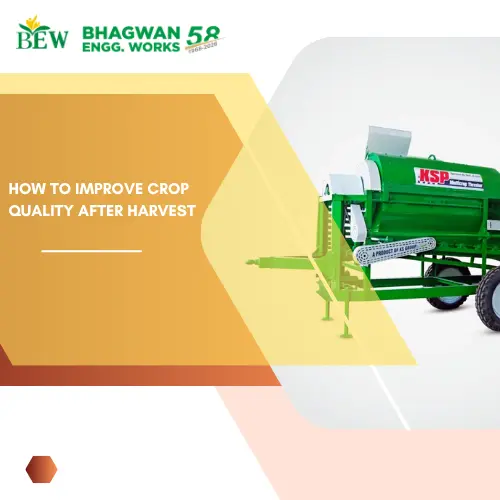
Introduction
Collecting a crop is only one aspect of successful farming. The market value, storage life, and profitability of the harvested crop depend substantially on its post-harvest quality. A healthy crop can be severely damaged if mishandled after harvest. This post-harvest mishandling can lead to grain damage and contamination as well as moisture and quality issues.
Today’s Agriculture emphasizes both higher production and the maintenance of crop quality during harvest and subsequent storage. With the right harvesting, cleaning, drying, and processing techniques, farmers have a greater chance of getting higher returns with lower losses.
Why Post-Harvest Management Matters
Post-harvest management refers to the handling processes performed after harvest, including grading, cleaning, threshing, drying, sorting, packaging, transportation, and storage.
Proper post-harvest management offers several benefits:
1. Minimizes the percentage of crop losses.
- Ensuring grain quality.
- Enhances prices in the market.
- Solves storage issues.
- Enhances the profitability of the farm.
- Secures improved food security.
Proper management of harvested crops enables farmers to safeguard the productivity of their efforts and land and to obtain greater reward on investments.
Harvest at the Right Time
The one major factor that affects the quality of a harvested crop is timing to target the right stage of maturity.
If harvested too soon, grains are often immature and have higher moisture content. If harvesting is delayed, then losses increase due to shattering, insects, and weather.
Farmers need to plan their harvest timing based on crop maturity and appropriate weather conditions. The crop should be harvested at an appropriate time to preserve grain size, weight, color, and nutritional constituents.
Use Efficient Threshing Methods
Threshing is the separation of grains from the stalks and crop residue for harvesting. Grain damage can occur during threshing due to improper threshing equipment and/or operation.
Most farmers use the Multicrop Thresher to thresh several crops efficiently and with little grain damage. For cleaner, more market-ready grain, it should be properly threshed.
Modern threshers also reduce labor and speed up the harvesting process.
Ensure Proper Cleaning and Sorting
Once threshed, the grains should be cleaned and sorted. Foreign particles such as stones, dust, straw, and damaged grains will affect the overall quality of the product.
Cleaning helps:
- Refine grain structure.
- Prolong shelf life.
- Minimize pest problems.
- Improve Market Value.
Quality sorting enables farmers to distinguish and declassify top-quality products from substandard materials in the Market accordingly.
Dry Crops to the Recommended Moisture Level
Moisture is one of the greatest enemies of stored products. Too much moisture around can lead to mold, fungi, and bugs.
Crops should be dried after harvesting and threshing to the specified moisture content before storage. Proper drying helps maintain grain quality during storage.
It is advisable to closely monitor moisture content on the farm and use appropriate drying methods based on variety and conditions.
Invest in Quality Equipment
Mechanical equipment utilized in various post-harvest operations is also a serious consideration. Suitable machinery helps to minimize losses in most instances and also increases productivity.
Farmers often check the price of a Multicrop Thresher before buying equipment that is worth the money.
Good-quality equipment reduces processing costs, time, and labor.
Focus on Storage Conditions
Storage is equally critical as harvesting and processing. Good crops can go bad if not stored properly.
Ideal storage facilities should provide:
- Has no MSDS for moisture protection.
- Good ventilation.
- Eradication.
- Clean environments.
- Managing temperature.
Periodic checks ensure potential storage problems are caught in time to prevent significant losses.
Appropriate storage maintains crops’ quality and worth over extended durations.
Evaluate Equipment Value Carefully
All farmers should consider more than just the cost of buying machinery.
Factors to consider include:
- Performance.
- Durability.
- Interruption.
- Bearing gas efficiency.
- Availability of spare parts.
Several buyers consider the price of the Multicrop Thresher Machine, along with the above factors, when determining the equipment’s value.
Simple, sensible buying decisions will help boost farm performance in the long run.
Improve Operational Efficiency
Effective crop harvesting and processing systems minimize delays and sustain quality.
An efficient Multicrop Thresher Machine can be used to separate the grains of various crop varieties with minimal grain damage. This aspect requires special consideration for people who practice different crops in a year.
Enhanced operational efficiency leads to faster throughput and improved handling of harvested produce.
Consider Regional Market Factors
The prices of farming machinery vary from place to place due to dealer networks, transportation costs, and market demand.
Farmers often consult multiple vendors and compare prices of Multicrop Threshers in India before buying. By studying prices from various suppliers and finding the right value for money, farmers can select equipment based on affordability and quality.
The appropriate equipment in place will facilitate smoother crop handling and, in turn, better final results.
Common Mistakes That Reduce Crop Quality
Farmers should avoid several common post-harvest mistakes:
- Unable to harvest in time.
- Too much moisture in the grain.
- Vigorous threshing/spitting.
- Dirty.
- Unsuitable Storage.
- Poor pest management.
- Damaged during handling and transport.
By overcoming these challenges, we can tremendously increase quality and profitability.
Conclusion
Ensuring crop quality at all stages after harvest (here, under the heading ‘harvest’) is an important aspect of crop management. It is vital that the crop is harvested at the right time, properly threshed and cleaned, kept in the correct moisture content and stored in a safe environment.
The latest technologies and improved management practices are essential to minimize losses in modern farming and optimize economic sreturns. Implementing good post-harvest practices can also help maintain product quality, improve farm sustainability, and fetch higher market prices.
Maintaining end-of-harvest quality at the forefront can lead to maximum benefits and sustain the grower over time.