The Missing Linkage between Harvest and Higher Profits

After the Combine Leaves: What Comes Next in Field Management
April 23, 2026
The Power Behind Smarter Grain Processing in Modern Farming
April 30, 2026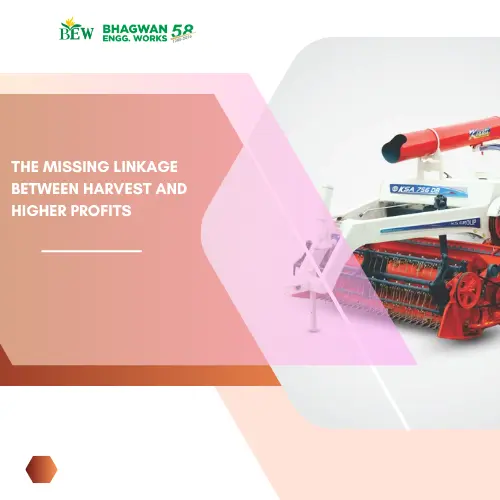
Harvest is commonly regarded as the last stage of farming whereas in real sense, it is just a part of the process. The real aspect that will make or break profitability is after the harvest is made. Most farmers pay much attention to sowing, irrigation and harvest, but pay little attention to the period that allows to tie all these activities together—after harvest field management. This stage is significant in making sure the land is productive and prepared to go through the repeating process.
Failure to do this may result in wastage of resources, low soil health, and loss of an opportunity to earn more revenue. Conversely, crop residue can be utilized well to improve the efficiency and profitability of farms.
The Importance of Post-Harvest Management
Fields are usually left with a lot of straw and stubble after harvesting. Some might regard it as waste but in reality it is very valuable when managed appropriately. When this residue is not managed well, it may cause pest infestations, inability to prepare the soil and even environmental problems like burning.
The new farming methods focus on transforming this waste product into a useful product. In this way, farmers not only conserve the environment but also enhance the soil fertility and structure. It is here that the appropriate tools and strategies are key.
Transforming Trash into Treasure
Farmers can use crop residue as an asset instead of perceiving it as a liability. Effective utilization of the by-products of straw leftovers may generate useful by-products like animal fodder. This will not only minimize wastage but will also generate a new source of income.
Such machines as the Straw Reaper are created to make this process simpler. They assist in harvesting, slicing, and washing of the residue as one activity. With this type of equipment, farmers will be able to save on time and effort, and maximize the value that is drawn out of their fields.
The Importance of Effective Machinery
Technology has changed how farmers have approached post-harvest activities. The conventional process took a lot of time and manual work, but with the current machines, it can be done in a short time and with many tasks at the same time.
Straw Reaper Machine is designed in a way that the fields are cleared in the most efficient way. It does not just collect straw, it also separates any other grains which remain, so that nothing is wasted. Such productivity enables farmers to get ready to plant another crop without wasting time.
Cost and Returns Balancing
Farm equipment is a huge investment and cost is always a big issue. Different alternatives are frequently evaluated by the farmers to achieve the optimal price and performance balance.
The Straw Reaper Price will assist in analyzing the feasibility of the machine within the budget range and in fulfilling the operational requirements. Though the alternative cheaper products might be appealing, they might not be consistent in results or even durable.
Likewise, the Reaper Price may also be differentiated based on features, quality of building and capacity. The selection of the appropriate machine ought to be based on long-term worth as opposed to the initial investment.
Regional Market Considerations
The price of equipment may vary depending on the demand, availability, and distance to the manufacturers. As an example, the Straw Reaper Price in Punjab might not be the same as that of other areas due to the increased demand and vibrant agricultural practices.
Farmers who have the time to visit various markets are usually able to get better offers and not lose quality. Having the knowledge about these differences can assist in making smarter buying choices.
Evaluating Long-Term Investment
In the case of farm machinery, one should not just look at the initial price. The Straw Reaper Machine Price is not all that concerns the investment. Such considerations as fuel efficiency, maintenance needs, and longevity are also significant.
An excellent machine will be able to minimize the delays in operations, lower the costs of repairs, and enhance the productivity. In the long-run, such advantages pay off in increased profitability and this renders the investment worthwhile.
Green and Economic Benefits
The positive effect on the environment is one of the greatest benefits of proper residue management. Rather than burning crop residue which causes air pollution, farmers can make use of the same to come up with useful materials.
This is not only useful in keeping the air cleaner but also offers economic advantages. The processed straw may be distributed as an animal feed or the processed straw may be sold which is another source of income. Simultaneously, lower labor expenses and quicker field preparation are part of the general efficiency.
Getting Ready for the Next Crop Cycle
After clearing the field, the second stage is to prepare the soil to be planted. Correct residue management will provide a smoother surface, increased soil aeration and increased adhesion of moisture.
These are crucial to the proper growth and yield of crops. When farmers invest in effective post-harvest practices, they tend to have improved outcomes in the subsequent season. This shows how crucial it is to close the gap between harvest and the subsequent planting cycle.
Smart Decisions About Farming
The selection of appropriate equipment and implementation of effective practices have the potential to change how farmers treat their fields. It is not merely doing but doing it in a manner that will give optimum returns.
The factors that farmers need to consider in the choice of machinery are the size of the farm, the type of crop produced, and the resources available. Through sound decision making, they will be able to make sure that their operations are efficient and sustainable.
Conclusion
The process of harvest to increased profits does not conclude with harvesting. The actual distinction is on how farmers treat their fields subsequently. By working on the residue management, investing in the correct machines and embracing the new practices, they can open new dimensions of productivity and profitability.
There is no single tool or step that acts as the missing link, but a series of clever decisions and effective procedures that transform what is left behind as residue to opportunities. When this gap is tackled properly, farmers will be able to attain improved results season after season.