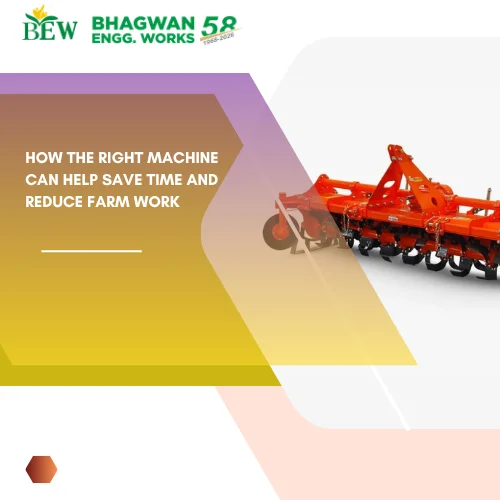
Harvesting is not the end of the work on the farm. Once crops are cut, farmers still have to manage straw, manage stubble, prepare the field, deal with the leftover material and prepare for the next crop. The period between two cropping periods can influence the entire cropping schedule. Using the right combination of machinery, planning ahead of time and timely field operations, farmers can optimize the use of their available labour, fuel and tractor power.
Managing Crop Residue Quickly
Once the crop has been harvested, the field is often left with an abundance of straw and crop residue. If left, the residue can cause a slower, more awkward operation later on in the cropping cycle. Stripping, shredding or clearing the straw rapidly keeps the field tidy and ready for future use. The Straw Reaper can be used to lift or burn crop residue in preparation for the next stage.
Why Timing Matters After Harvest
Most farm work is planned for a limited period, i.e. between one harvest and the next. If it is late getting underway, it can have consequences for soil cultivation, sowing and irrigation.
Timing each operation correctly enables a farmer to stick to the planned schedule.
Proper planning also ensures that machinery and workforce move swiftly from one operation to the next. This is particularly handy if there are several fields to be dealt with in a short time.
Choosing Equipment For Field Needs
Every farm has a different combination of field size, types of crop, soil and machinery needs. Farmers need to choose the correct equipment according to the task rather than the largest. The Bhusa Machine Price may be a concern, but capacity, maintenance, power needed, working speed, and proposed use need to be considered.
Improving Residue Collection
Saving time on residue collection can be very worthwhile. If the straw is handled, the number of passes over the crop can be reduced with the tractor. This will also save fuel and give the tractor more time to do something useful. The Reaper Price should therefore be considered with the machinery output, ease of operation, and the type of residue to be handled in the growing season.
Preparing Fields For The Next Crop
After the residue has been dealt with, then preparation of the land for the next crop can be started. Without modern machinery, it can take many passes and use significant amounts of time and fuel. Advanced machinery can cut down on the number of passes used and help to hasten the process, depending on the state of the land and the equipment used.
Combining Important Farm Operations
Operating more than one machine in one pass, such as the Super Seeder, can reduce the travel time of the tractor and the preparation of the land. Some farm machinery, such as the Super Seeder, can operate more than one operation during the one pass (e.g., residue management and sowing). These types of operations can be useful when moving quickly between seasons.
Matching Machines With Tractors
Another crucial factor in working efficiently in a field is tractor compatibility. A machine will need an optimum level of power, lifting and hydraulics. If the equipment is too heavy, then the working speed will decrease, and more strain will be put on the machine. Farmers should refer to the tractor manual for the right fitting tools.
Understanding Machine Size And Weight
Machine size and weight may be a factor in how easily the equipment moves across the field. For example, a wider machine will cover a greater area per pass, and a heavier machine may be better in some conditions for ground contact. However, if a machine is too heavy, it can cause an increase in soil pressure, particularly when working on wet ground. Farmers should consider the size of their fields, soil type, power of tractor and operating conditions when selecting equipment.
Considering Long-Term Equipment Value
The initial purchase price of a piece of farm machinery is not the only factor to consider. Cost of maintenance, availability of spare parts, fuel consumption, lifetime and availability of a machine’s service are also important considerations. While the Straw Reaper Price may seem attractive initially, value for money and performance reliability are determined over a longer period, as is service.
Making Sowing More Efficient
Fast field preparation is advantageous as it provides greater timing flexibility to farmers. By expediting residue management and tillage, crop sowing can be performed at the optimal time. An appropriate Super Seeder Machine can enable residue management to be combined with sowing in a timely fashion, or where field conditions are favourable, in order to reduce operations and streamline processes over larger areas.
Selecting Reliable Manufacturers
Another key aspect when farm equipment is being purchased by farmers is the manufacturer. Well-designed engineering, correct components, hard-wearing service support and quick access to spare parts all enable machinery to be maintained with relative ease. When farmers are evaluating a super seeder manufacturer in India, beyond the specifications, they should also investigate build quality, performance in the field, after-sales support and the ability to service accordingly.
Adapting To Local Farming Conditions
This equipment may be effective in one location but is unlikely to have the same results in another location. Soil type, crop residues, field size, weather, and usual farm practices will all impact machine performance. It is important to select equipment suitable for the location of the user. For example, a farm in Punjab seeking the best super seeder available might consider equipment based upon the crops, soil conditions, tractor availability and field operations typical for the location.
Improving Overall Farm Efficiency
Faster farming doesn’t mean larger/over powered equipment. It means the operation should be so synchronized with each other to achieve the optimum performance. The “best super seeder” for one farm may not be the “best” for another.
It is essential to compare the operational width, power requirement, work done in the field, maintenance cost, and operating cost before finalizing.
Proper match of farm and machinery facilitates each hour’s field work.
Final Thoughts
Farm work speeds up after harvest when residues are handled efficiently, equipment matches the workload, and field operations are planned for the immediate crop rotation. Minimizing unnecessary cycles, maintaining equipment, and selecting machinery that fits the climate can improve efficiency and save time when it is most needed. Good practice can ensure that time is saved during the harvest, minimizing idle time and keeping the field ready for the next operation.