Why Two Machines That Look Similar Can Have Very Different Performance

Keeping Harvest Equipment Ready for Every Season
July 9, 2026
How Threshing Methods Affect Crop Handling
August 11, 2026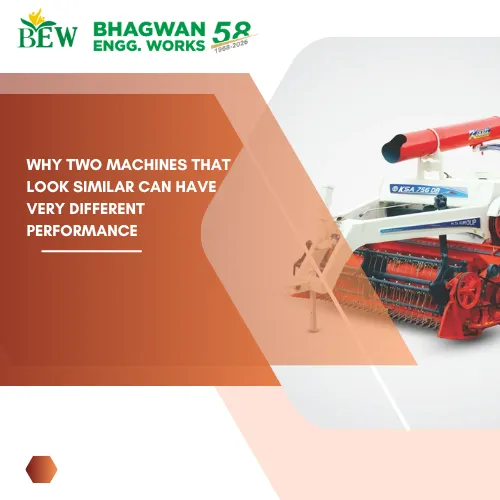
Introduction
Much farming equipment looks nearly the same at first. They can be equally big, have similar designs and do the same job. For these reasons, most farmers take the assumption that all machines provide the same performance. It is not until they start working in the field, that this is far from true.
A machine’s efficiency is influenced by factors other than good looks alone. Machinery proportions, construction and design, materials used, component strength, power transfer, frequency of servicing, and the skill and knowledge of the suppliers all have a major impact on performance. Machinery selected on price or aesthetic qualities can lead to reduced productivity, increased repair costs and reduced structural lifespan.
Often you find two machines that seem to do the same job but deliver the results that are worlds apart and what should you look out for when thinking of an investment?
Build Quality Makes the Biggest Difference
The design of the machine overall will be determined by performance under Continuous Field operation.
Good machines are made with tougher steel, welding with higher precision, structurally designed parts, etc., for the purpose of running with less vibration, sustaining heavier workloads without over wearing.
Cheaper equipment may have an approximate or cheap appearance, yet use thinner components, which wear much quicker while performing the normal work.
Increased robustness (a stiffer frame) provides increased stability and helps ensure the machine can hold a stable process when used for long work periods.
Engineering Design Affects Field Efficiency
Design in a machine is often more important than what can be seen from outside.
Manufacturers invest years in improving:
- Material flow
- Cutting efficiency
- Power transmission
- Feeding mechanisms
- Grain separation
- Fuel efficiency
Tools like these can lead to immense gains for the user through small design tweaks, both in efficiency of operation and fuel economy.
Simply designing two machines differently while accomplishing the same task can lead to very different outcomes.
Component Quality Determines Durability
Within each farm implement are dozens of components in continuous motion.
These include:
- Bearings
- Chains
- Belts
- Gearboxes
- Shafts
- Rotating drums
- Blades
Components of higher quality have less resistance when in use and will work smoothly for longer.
Lower-quality components in a machine increase the likelihood of costly repairs and the need for replacement parts over the years.
Power Transmission Influences Performance
Based on a high power transfer to enable an effective operation of automation machinery in varying field conditions.
A transmission system that is designed to rigorous standards would waste less energy and increase the efficiency of operation.
Poorly designed systems may experience:
- Excessive vibration
- Higher fuel consumption
- Increased component wear
- Reduced output
The above example illustrates cases where two different plants use the same tractor H.P. and still one will provide significantly higher performance than the other.
Cutting and Feeding Systems Matter
Crop feeding is an important feature in feeding of crops when dealing with harvesting equipment.
A properly designed feed system functions continuously and smoothly by preventing self-impoverishment.
Efficient feeding systems provide:
- Better crop handling
- Reduced grain losses
- Lower machine stress
- Faster field coverage
Machines with an unbalanced feeding system tend to block more frequently. Operators have to shut down the machine for cleaning more often.
Manufacturing Precision Improves Reliability
Manufacturing enables accurate fitting of all the components.
Accurate machining reduces:
- Mechanical vibration
- Uneven wear
- Loose fittings
- Alignment issues
Greater accuracy produces the additional benefit of enabling the moving components to operate more correctly, which is vital for the overall life of the equipment.
Therefore, this is one reason why experienced manufacturers make equipment that has long-term consistency.
Maintenance Requirements Differ
Even identical machines may require very different levels of maintenance.
Higher-quality machines are often designed for easier servicing through:
- Accessible lubrication points
- Better component placement
- Simplified adjustment systems
- Easy replacement of wear parts
Reduced maintenance results in reduced downtime during peak farming periods.
Spare Parts Availability Matters
The performance of a machine is not only related to the operation every day.
Spare parts availability directly impacts productivity upon repair.
Good quality producers are typically backed by a reliable network of dealers and spare parts stock, and farmers can get back to work as soon as the machine has been serviced.
Essential spare parts are rarely available, leading to even longer waiting times during the busiest harvesting seasons.
Performance Should Be Evaluated Beyond Price
Buyers often give the only consideration to the transaction price.
However, the actual ownership cost includes:
- Fuel consumption
- Maintenance expenses
- Repair frequency
- Spare parts costs
- Machine lifespan
- Productivity
Something that costs a little more up front could potentially save enormous amounts in operating costs over a period of time, thus providing far more value in the long run.
During equipment investigations, equipment is often compared to other similar harvesting equipment such as the Straw Reaper.
Understanding Equipment Costs Before Buying
Usually, farmers tend to compare prices among various machines before investing.
A significant number of users check the Bhusa Machine Price simply to have a feeling of what they are willing to spend.
Similarly, ensuring the current Reaper Price is up to date can allow farmers to decide between reaper models based upon other differences rather than just price.
Some also compare the Straw Reaper Price from other brands to analyze the impact of product design, material and technology used on total cost of ownership.
Similarly, for consumers looking at the Straw Reaper Machine Price, machine specifications will allow them to buy based on how it performs rather than how it looks.
Choose Long-Term Value Instead of Short-Term Savings
An investment in agricultural machinery should be made carefully.
Instead of selecting the “good-looking” machine, a farmer should consider:
- Manufacturing quality
- Engineering design
- Field performance
- Fuel efficiency
- Ease of maintenance
- Warranty support
- Dealer service
- Spare parts availability
- Overall durability
Optimum machinery selection not only enhances productivity but also cuts operating costs during the life of the machine.
Conclusion
While machines may seem to look identical, actual operations in the field can vary significantly. For that reason, farm equipment should be judged on factors such as build quality, engineering, manufacturing precision, component robustness, power transmission, maintenance requirements, and after-sales support. Only by considering all these factors can farmers make a better long-term investment decision by choosing machinery that lasts longer, runs efficiently, and is less prone to breakdowns over time.