Your Next Crop Depends on What You Do After Harvest

Modern Solutions for Faster Field Preparation and Sowing
September 4, 2026
Heavy Duty Performance in the Field
September 8, 2026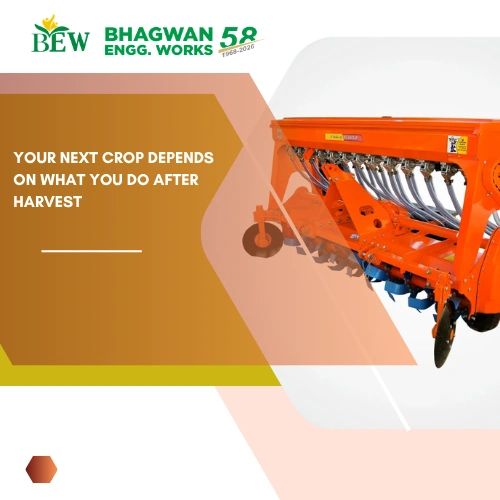
The end of the cropping cycle is just the beginning of the next planting. Out of the field, the next crop has already begun. The immediate post-harvest practices carry a great deal of weight in determining whether the next crop will be off to a good start. Preparatory work, residue handling, soil status, seeding date and equipment are key considerations at this point in the cycle.
For continuous growers, they find that it’s not always the economy of doing one more tillage operation but having the opportunity of time to do it all efficiently within the optimal window with all the appropriate tillage and crop-residue management practices.
But that’s where present-day farm machinery is revolutionizing farmers’ thinking about rotating from one crop to the next.
Why the Period After Harvest Matters
After harvest, the farmer has little time before the next crop is planted. Typical operations (you can see the list of these at all-terrain, all-weather harvesting.com/harvesting-101/crop-harvesting) are used when preparing the field and planting.
Every journey of the tractor consumes time and fuel and can also add to the number of working people and increase the amount of soil being disturbed.
Contemporary equipment tries to reduce this number of passes by combining some operations into one. Having to put equipment in and out can be of real benefit when you wish to go rapidly from one crop to another.
It isn’t just about speed. When operating in the field, the seed should be placed properly, residue should be moved effectively, and the implement should perform uniformly.
Managing Crop Residue More Efficiently
Crop residue is now a high priority for farmers. Many paddy fields, for example, still contain copious amounts of straw after harvest that are either being burned or cleared, or allow the residue to provide all the benefits it offers as part of a more sustainable system of field management.
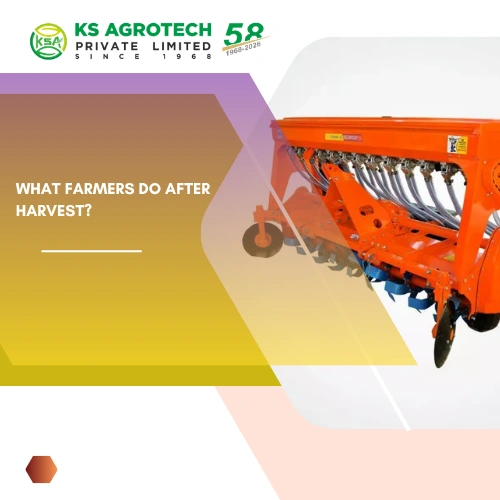
Super Seeder can assist with sowing tasks in a residue-covered field. Depending on the ground conditions and implement set-up, a Super Seeder can help manage crop residue and prepare the ground ready for sowing on the same pass.
This process will minimize the number of passes through the field and assist the grower in their use of the available time between crops.
Sowing Directly Into Residue
By-product-based cultivation advances offer the opportunity to handle the following plant without totally clearing the parcel initially.
If heavy paddy straw is left in the field after harvesting, then a Paddy Stubble Super Seeder may be helpful. Instead of removing residue before sowing, it offers the option of engaging with what is there, using appropriate machinery.
This promotes a shorter duration of field preparation and could decrease the number of operations prior to the process of sowing. This is also advantageous to those works wherein fractional residue is kept exposed.
But it also depends on residue amount and moisture, the type of soil, engine power of the tractor, condition of the field, and proper settings of the tractor machine.
Choosing the Right Machine Size
Agricultural equipment should be suitable to the needs of the farm and the tractor. The working width is an important feature because it determines the field capacity and area covered per run.
When it comes to testing the 7 Feet Super Seeder Price, farmers can consider a number of factors. For example, the quality of the separator, power consumption, machine weight, working style, seed-frequency machine design, residue handling ability and other specific characteristics.
The model could have a wider working width, allowing you to increase your coverage in the field, but only under the right conditions and with the correct tractor size. Pricing or size alone shouldn’t be the only guide.
Understanding Machinery Cost
Cost will naturally be a leading consideration when farmers compare different pieces of equipment. On the purchase cost, take into account the lifetime operating costs and how long the equipment should last.
The price of a Super Seeder will depend on the types mentioned above. Apart from the above-mentioned, though, price will depend on various parameters like the specifications, the working width, the architecture, the manufacturer and the location. Farmers must remember that they should compare prices, not quote.
A machine that makes fewer passes in the field and is durable and easy to care for can have superior economics in the long term to a lower initial-priced machine with higher operating and/or maintenance costs.
Looking at the Complete Equipment
Farmers should view the total operating system when assessing the Super Seeder Machine rather than a single specification.
Potential reasons may be tractor issues, hydraulic needs, PTO needs, seed-metering ability, depth capacity, working capability, residue capacity, frame strength, adjustability, and spare parts.
It’s worth trying it out. There are often things to learn from seeing a tool in the field and away from sales floor demonstrations.
What Determines the Cost in India?
Prices may also vary by manufacturer, location, specifications, materials used, margin levels of the dealers and based on the configuration of the equipment. As such, farmers would be better off comparing Super Seeder Price India of similar models rather than comparing the headline prices without reference to specifications.
Other Considerations: There are other features to consider in this side-by-side comparison of equipment warranty coverage and after-sale service. Agricultural machinery has to work in difficult conditions, so the availability of alternative parts and technical support can determine the long-term value of the machine.
The availability of local support can make a significant difference in the short window available for sowing, when every unexpected break in service can cause costly delays.
Why Tractor Compatibility Matters
Combine the Implement with the Tractor. Think of the implement and the tractor as one unit. An implement that exceeds what the tractor can easily handle in terms of weight or horsepower may cause the operation to perform poorly and operate inefficiently.
Recommended tractor hp, hydraulic lift specifications, PTO details, and operating conditions are to be referenced on the product before ordering.
Fuel efficiency, operational speed, ease of handling, and soil conditions may influence actual effectiveness.
Comparing Different Options Before Buying
As you explore, farmers may find a variety of setups and Super Seeder Machine Price. Although you may not want to buy one based on a lower price, it is useful to compare the construction, working width, residue-handling ability, seed placement, service support and maintenance of the machine.
The equipment that is suitable depends on the cropping system on your farm, and on the machines you already own. Just because something works well on one farm does not automatically mean it is going to be the best option on your farm.
Turning the Post-Harvest Window Into an Advantage
Post-harvest is both a challenging and rewarding time. Quick completion of fieldwork allows for critical maintenance and adjustment, improves efficiency and reduces the amount of farming equipment that travels through the paddocks.
Contemporary residue-management and sowing equipment can aid in integrating multiple tasks, easing the transition from one crop to the next.
In the end, it all starts before the seed hits the ground. No matter whether the seed is destined for the first or final resting place, decisions on residue, field preparation, equipment, tractor matching and sowing timing all leave marks on the next crop that starts.
For a farmer considering a Super Seeder Price, then, the first question may no longer be, “How much does the machine cost?”, but rather, “How well can this machine manage my entire transition from one planting season to another?”
If machinery is chosen with the farm’s actual needs in mind, days post-harvest can be something more than just a timed dash. They can represent time to optimize efficiency, eliminate work the farm doesn’t need and lay a better foundation for the crop to follow.