Compact Harvesting Technology Transforming Small-Scale Farming

How Mini Combine Harvesters Reduce Harvesting Time and Cost?
January 30, 2026
Comparing Manual and Mechanical Reaping Methods
February 9, 2026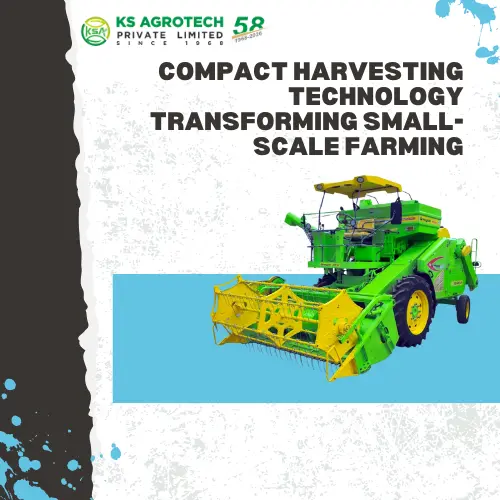
Farming at a small scale is the main activity in most areas of agriculture particularly where there is a scarcity of land and resources have to be utilized wisely. The progress in technology over the years has transformed the way farmers conduct their farming and harvesting. Among the most significant changes, the advent of small harvesting technology should be mentioned, as it has been assisting small farmers in raising their productivity, lowering costs, and gaining control over their operations.
The Challenges Faced by Small-Scale Farmers
Very small farmers usually have small pieces of land, inadequate shapes of field, and low budgets. The common forms of harvesting used are usually traditional techniques based on either manual labor or big machines that cannot be applied to small plots. The use of manual harvesting is very time consuming and labor intensive and large harvesters are costly and hard to navigate as they are costly to maintain.
Such difficulties usually lead to late harvests, losses of crops, and more stress on operations in the season.
What Is Compact Harvesting Technology?
Compact harvesting technology denotes smaller yet efficient machines that can be used to do harvesting work in a limited area. The machines are also designed to integrate necessary harvesting processes of cut, threshing, and cleaning with easy use and low cost.
They are small which means that they work well in small and medium landholdings, as they can work in narrow fields and rough terrain.
Faster Harvesting with Limited Resources
Speed is one of the greatest benefits of the compact harvesting machines. The traditional method of harvesting is a process that takes time and man power in several stages. Small machines make this task easier, since multiple tasks are done within a single pass.
This efficiency enables the farmers to harvest fast thereby minimizing the chances of having to lose their crops due to weather fluctuations or excess maturity of the crops. On time harvesting also creates space in time to prepare and sow the next crop.
Reduced Dependence on Manual Labor
Shortages in workforce in agriculture have been a developing issue. The use of compact harvesting technology has greatly minimized the use of manual labor and therefore, farmers are able to handle harvesting with fewer employees.
These machines make farmers remain productive even when there is limited labor by automating the major harvesting activities. Not only does this reduce the cost of labor but it also reduces the number of delays made in times of high harvest.
Cost Efficiency for Small Farms
Small-scale farmers are more concerned with affordability. Small harvesting machines are developed to provide high productivity at a low investment level unlike the large-scale equipment.
Some aspects that farmers consider include which option will use less operating cost, less fuel consumption and less maintenance. While comparing machines, many also assess the mini combine price to ensure the investment aligns with their budget and expected returns.
Reduced fuel consumption and easier maintenance also make the compact harvesting technology even more cost-effective.
Improved Crop Quality and Reduced Losses
Several losses can cause by manual harvesting and repeated handling, loss of grain, and failure to produce uniform crops. Little harvesting equipment has been developed to work the crops gently and effectively with less shattering and spillage.
Schickard cutting and rigid threshing guarantee higher recovery of grain and cleaner production. Better quality will result into better prices in the market, and an overall increase in profit margins to the farmers.
Easy Operation and Maintenance
The harvesting machines are usually smaller and therefore not difficult to operate in comparison to large harvesters. The learning curve is also minimized through simple controls and easy designs enabling the farmers to operate the machines without any form of doubt.
The maintenance work is also not complex and the components are few and easy to find (spare parts). This saves time and makes the machines continue working during the harvesting period.
Better Suitability for Diverse Field Conditions
Small farms can be of uneven ground, narrow tracks and different soil. Reduced harvesting machines are designed to suit these problems.
Their light weight reduces soil compaction and therefore maintains the soil structure to support crops in the future. Simple manoeuvreability guarantees full harvesting without leaving behind uncut fields, which enhance efficiency in the fields.
Supporting Sustainable Farming Practices
The compact harvesting technology helps in sustainable agricultural production due to the minimization of fuel used, waste of crops and the impact it has on the environment. Productive machines assist farmers to make prudent use of resources and remain productive.
These machines help in ensuring sustainability of small scale farming operations in the long-term by encouraging timely harvesting and improved soil health.
Transforming the Future of Small-Scale Farming
Use of small technology in harvesting is changing the way small scale farmers are going about harvesting. These machines enable farmers to compete favorably and enhance their livelihoods by providing efficiency, affordability and convenience.
Small-scale agriculture will become stronger now through the growth of compact harvesting solutions as a solution to food security in the face of the constantly growing technological advancements.
Conclusion
Small-scale farming has now changed with the introduction of compact harvesting technology. It deals with some of the major problems like labor expenses, costs, and inefficient harvesting systems. Compact harvesting machines are allowing small farmers to be more productive and profitable as they allow them to operate faster, minimize losses, and increase the quality of their crops. The success and sustainability of small-scale farming could be a big difference in terms of investing in the appropriate harvesting technology.