Harvesting Equipment Selection Based on Farm Size & Crop Type

Comparing Manual and Mechanical Reaping Methods
February 9, 2026
How Bund Makers Improve Water Management in Agriculture
February 12, 2026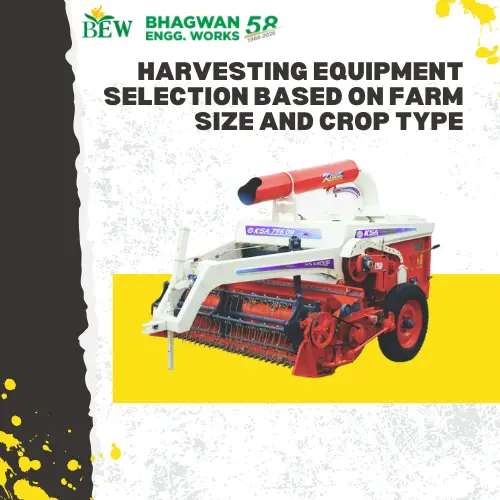
Selecting the appropriate harvesting machinery is the most important issue that farmers need to address to enhance productivity, lessen labor reliance, and safeguard the quality of crops. There is a variety of machines in the market today and one of the main reasons is that the type of machine to be chosen is highly dependent on two factors, which are, farm size and crop type. The correct match provides effective running of the business, reduces operational expenses in the long run, and has a positive turnover in the farm.
Why Harvesting Equipment Selection Matters
Harvest is an operation that is time sensitive. Losses of crops, poor quality of grain and high costs of labor may be caused by delays or ineffective ways. The equipment must be chosen properly to allow the farmers to get the crop at the optimal point of crop maturity and reduce wastage. It also guarantees the ease of operations on the fields and ensures long-term sustainability of a farm.
Understanding Farm Size Requirements
Small Farms
Small farms frequently have to use small and multi-purpose harvesting systems. Such farms are typically concerned with minimizing initial investment as well as operating efficiency. Small plots are best suited to lightweight machines which are easy to handle and maintain. With such equipment, farmers are able to harvest without consuming a lot of fuel and have very complex operations.
In the case of small farms, ease of use and flexibility on various crops may be of greater importance than high output capacity.
Medium Farms
The medium-sized farms require a compromise between productivity and cost effectiveness. The harvesting machines of this type are supposed to have increased capacity as compared to the small-farm machines but to be flexible to work with several crops. A good choice is machines that are capable of working longer hours of continuous working without frequent breakdowns.
At this scale, farmers often compare output capacity and operating efficiency with overall investment, considering factors such as reaper price, maintenance needs, and fuel usage.
Large Farms
Large farms require harvesting machines with a large capacity to work fast and last long. These machines are designed to cover large acreages with limited harvest intervals. A large scale operation will often demand advanced features like broader cutting paths, greater engine capacity, and automation.
Whereas the initial investment is higher, the large farms enjoy the advantages of cut short harvesting time and less reliance on labor.
Matching Equipment to Crop Type
Cereals and Grains
Wheat, rice, and barley are some of the crops that need accurate cutting and proper management of the grain. Cereal harvesting equipment must be such that it has a clean cut, less grain wastage and proper management of the straw. Cereal crop machines usually have features that assist them in sorting grain and straw well to ensure that their yield remains the same.
Pulses and Oilseeds
Oilseeds and pulses are frail and easily broken. The harvesting machines required to be used in these harvests have to work at low speeds and should deliver soft handling to minimize losses. Adjustable cutting height and special headering are essential in achieving clean harvesting.
Forage and Fodder Crops
Forage crops such as fodder maize or grasses demand equipment that is oriented to the process of cutting and collection and not grain separation. The machine must offer consistency in cutting and handling biomass to be stored or processed.
Multi-Crop Farms
Multi-crop farms are the ones that require equipment that is versatile in harvesting. Machines that can be easily adjusted or changed depending on the crops would allow farmers to change crops without necessarily having to purchase a lot of machines. This is particularly useful in areas that have different patterns of crop production.
Key Factors to Consider Before Final Selection
Field Conditions
The type of soil, water content, and field configuration affect the work of equipment. Unlevel or wet fields demand good traction and stability of machines. Smaller or unregular fields are better served by small equipment whereas large machines are used on open and flat farmlands.
Availability of Skilled Operators
There are harvesting equipment that cannot perform optimally without the intervention of a trained operator. Operators skill availability should be used by the farmers to decide on the type of machines to use which are advanced or automated machines.
Maintenance and Service Support
The availability of spare parts and prompt service support would be necessary in reducing downtimes on harvest season. When equipment that has a good service network is selected, then the reliability would be long lasting.
Long-Term Benefits of the Right Choice
The use of harvesting equipment that is based on farm size and type of crop will see a better efficiency of that operation, better recovery of crops, and less operational stress. In the long run, the appropriate machine helps in increasing the profitability, quality of crops and the use of resources.
When farmers put time to think about what they require and match the choice of equipment to that need, they are better placed to adjust to the shifting agricultural needs and have greater returns on their investments.
Conclusion
Harvesting machines do not fit all. The size of the farm and the type of crop will be the determining factor in the best machine. Incorporating knowledge about the needs of the field, crop properties, and the long-term objectives of the operations, farmers would be able to make wise decisions, which would improve the productivity and sustainability. Wise investments now will see the harvests and farm working much easier in future.