Smart Farming Starts with Proper Land Leveling

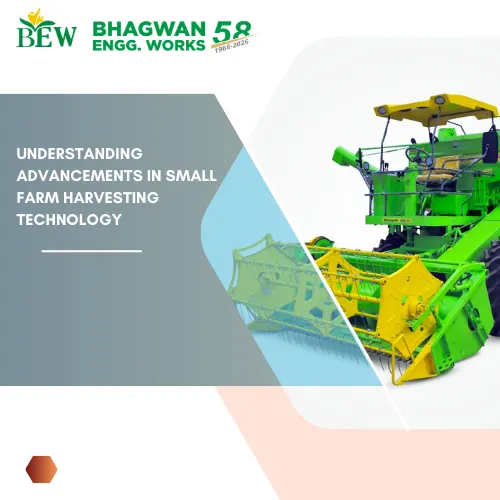
Understanding Advancements in Small Farm Harvesting Technology
March 9, 2026
Farming today is not restricted to the conventional practice. Farmers are now embracing modernized farm machineries and smarter ways of preparing their fields to enable them have higher productivity and minimize their production costs. Proper land leveling is one of the most significant procedures in the land preparation to use in a field. By leveling a piece of land, it makes the perfect condition where crops grow and there is easy irrigation as well as running of the farm machinery. To farmers that want to increase efficiency and maximize yield, a dependable land leveler has become a key component in smart farming.
The Importance of Proper Land Leveling in Agriculture
Land leveling is very important in ensuring that the environment is balanced in terms of farming. This may result in various problems including waterlogging in certain places and lack of sufficient irrigation in other places due to uneven fields. Such inconsistencies would impact on the growth of plants and may result in low yields. Correct leveling is useful in making sure that water disperses evenly across the entire field, which gives the crops even moisture.
Level land also aids in proper fertilizers as well as nutrient distribution in addition to increasing the efficiency of irrigation. In uniform field surface, the even distribution of fertilizers is achieved and the fertilizer penetrates the plant roots better. This is the balanced supply of nutrients that contributes to the development of crops that are healthy and stronger during the growing period.
The other significant benefit of land leveling is the enhanced farm operations. The smoothness of tracts on flat ground will allow tractors and other farming equipment to consume less fuel and save time of great importance in farming processes, sowing, spraying and harvesting.
How Land Levelers Support Smart Farming
Due to the increased need of efficient farming methods, land levelers have been introduced as a necessity to the farmers. These tools are used to level the surface of the soil at a fast rate and in a precise manner. A land leveler is attached to a tractor to dislodge clumps of soil in the soil and spread the soil uniformly on the ground.
The modern land levelers are constructed using hard materials and well-developed designs which enable them to work under different soil conditions. The soil can be loose, slightly wet, or moderately compact, but in any case, such machines can facilitate the process of developing a smooth and uniform surface in the field.
Most farmers who intend to buy such equipment usually weigh a number of factors before coming up with a decision. One of the most important considerations is the Land Leveler Price, as it directly affects the overall investment required for the farm. The knowledge of the pricing range will allow the farmers to choose equipment that will meet their needs without putting them outside their budget.
Factors That Influence the Cost of Land Levelers
Land leveling equipment may be very expensive depending on a number of factors. The implement size is among the main factors that influence cost. Bigger land levelers to fit bigger fields tend to use more rigorous materials and high-end engineering, which may be comparatively pricier.
It is also largely influenced by the quality of construction. Frames and blades of land levelers are manufactured of hardened steel and are likely to last longer and work more efficiently under severe agricultural condition. These models can be costly, but can be more beneficial in the long run.
Pricing may also be influenced by brand reputation and manufacturing technology. The famous agricultural equipment producers tend to invest more in designs and testing procedures and therefore the products are more reliable. Because of these factors, the Land Leveler Price may vary from one model to another depending on features, durability, and performance capabilities.
The compatibility with the existing tractor models should also be an issue to farmers. There are also some land levelers that are specially tailored and will work best in specific tractor horsepower ranges and will work optimally when in the field.
Benefits of Using a Land Leveler on Your Farm
There are several advantages associated with investing in a land leveler and therefore it directly leads to the enhancement of farm productivity. Among the most evident benefits, there is an improved water management. Once the land has been made smooth, the irrigation water will be evenly distributed over the land, eliminating wasteful water and the crops are given equal moisture.
The other advantage is enhanced soil structure. Land levelers evenly distribute soil and thereby bring about equal density in the soil, minimizing the occurrence of hard spots. This enables the roots of plants to extend deeper and to acquire nutrients more efficiently.
Another major strength is labor efficiency. The leveling process is labor intensive and time consuming when done manually, a land leveler mounted on a tractor takes a considerably shorter time. This gives farmers time to concentrate in other great farming activities.
The leveling of land is also done at the proper level, which minimizes the chances of soil erosion. In the case of a smooth and even land surface, water moves in a more even way and does not create deep tracks which may erode precious topsoil.
Making the Right Investment for Long-Term Benefits
The selection of the appropriate land leveling equipment is a wise move to those farmers who wish to engage in smarter farming practices. An accurate land leveler does not only increase the preparation of the fields but also the efficiency of the farm.
Farmers must consider the size of their field, the nature of their soil, and the compatibility with their tractor before they decide to buy it. All this combined with the quality and durability of the equipment will assist in ensuring that the investment brings in long-term value.
Conclusion
The first step in smart farming is the planning and good preparation of fields. One of the main processes that facilitate the enhanced irrigation, soil health, and the smooth farming activity is land leveling. By selecting high-quality equipment and understanding important factors such as the Land Leveler Price, farmers can make informed decisions that benefit their agricultural productivity. In the long run, the correct leveling of lands contributes to the cultivation of healthier products, increased harvests, and a more environmentally friendly attitude to modern agriculture.