Common Mistakes to Avoid During Field Cultivation

How Farm Mechanization Helps Reduce Harvesting Challenges
May 28, 2026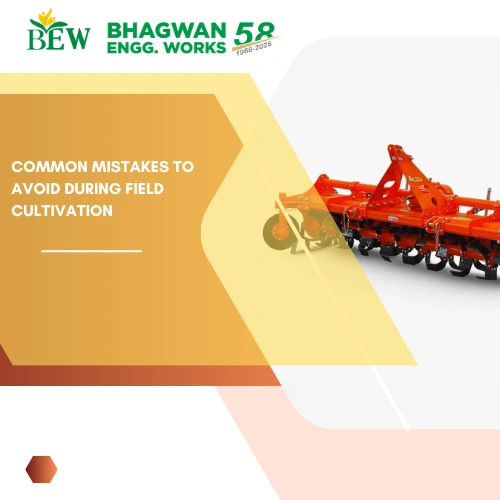
Field preparation is the most important stage of crop production. Cultivation, if done correctly, can provide ideal conditions for seed emergence, root penetration, moisture conservation, and nutrient uptake. There are many practices of cultivation that farmers do not realize can cause problems with crop growth.
The use of advanced machinery allows the rapid and less costly cultivation. However success still requires accurate planning and correct field practices. It is essential to be aware of the common mistakes that can be made during cultivation such as:
Why Proper Field Cultivation Matters
Prepares the soil-works the soil for planting, so the overall growth of crops will be good. Willumsen (1993) mentioned that Well-cultivated soils encourage better infiltration of water, less competition from weeds, a more fibrous root development.
Benefits of proper cultivation include:
- Better soil structure
- Improved seedbed preparation
- Enhanced moisture conservation
- Increased nutrient availability
- Stronger crop establishment
- Higher productivity potential
Steering clear of the most prevalent mistakes in cultivation allows your plants to begin life on the best footing possible.
Mistake 1: Cultivating at the Wrong Soil Moisture Level
One of the main errors farmers make is ploughing during wet or very dry conditions.
Cultivation when soils are too wet can lead to compaction, destruction of soil structure and large lumps which are time consuming to break down subsequently. When dry, additional fuel and machinery power may be needed to produce a good seed bed.
When establishing the crop, consideration must be given to the conditions of the field. At this stage it is important for the farmer to gauge field moisture conditions and determine the optimal time to carry out field work.
Mistake 2: Using the Wrong Equipment for Soil Conditions
Some types of soil are compared below respectively requiring the different way of cultivation equipment, for example: For heavy clay soils:, For sandy soils and For loamy soils:
Selecting an unsuitable machine can result in:
- Uneven soil preparation
- Excessive fuel consumption
- Increased machinery wear
- Poor seedbed quality
Most farmers prefer a Rotavator as the pulverization of the soil is very effective and the seed bed prepared is also fine for different crops and field conditions.
Employing the right equipment results in increased efficiency and safeguards the soil.
Mistake 3: Excessive Tillage
Cultivation is needed but frequent tillage will break the soil structure and lower long-term productivity.
Overworking the soil may lead to:
- Loss of soil moisture
- Increased erosion risks
- Breakdown of beneficial soil organisms
- Reduced organic matter levels
Current commercial practices, involving only the necessary cultivation to prepare the land, are assuming greater importance. However, careful handling of the land through. The tillage maintains its fertility and sustainability.
Mistake 4: Ignoring Field Residue Management
Residues are important for healthy soil. Surprisingly, many farmers are either plowing and burning very high residues without thinking much about it or just removing the residues.
Proper residue management helps:
- Improve soil organic matter
- Reduce erosion
- Enhance moisture retention
- Support beneficial microbial activity
Prior to planting, residue levels need to be evaluated and the appropriate equipment selected so it can work efficiently in the affected areas.
A Mini Rotavator is ideal for smaller farms and orchards to manage debris and for efficiently cultivating small areas in a firm seedbed.
Mistake 5: Uneven Field Preparation
Uneven cultivation results in miss-seeded areas due to uneven seed placement and variable crop emergence.
Poorly prepared fields may result in:
- Uneven germination
- Poor root development
- Difficult irrigation management
- Reduced harvest efficiency
Operators shall maintain the maximum machine depth, 5-7cm overlap, during cultivation practices. Proper adjustment of equipment will guaranteed uniformity of soil preparation throughout the field.
Importance of Choosing the Right Cultivation Machinery
Agricultural machinery is still found useful in enhancing the efficiency of cultivation.
A high quality Rotavator Machine will loosen the clods of soil, mix the crop residues, and prepare a fine seed bed in just one go. This minimizes the labor requirement and maximizes the field productivity.
When selecting cultivation equipment, farmers should consider:
- Field size
- Soil type
- Crop requirements
- Tractor compatibility
- Maintenance needs
Selecting the appropriate machine helps to lead to better cultivation.
Mistake 6: Poor Depth Management
Planting depth is a very important factor to the structure of the soil and establishment of crops.
Cultivating too deeply can:
- Increase fuel consumption
- Rtirez the infertile soil to the surface
- Disturb soil moisture levels
Cultivating too shallow may:
- Leave compacted layers untouched
- Provide inadequate seedbed preparation
- Reduce root penetration
To optimize the removal of compaction, setup the equipment of the farmers where the depth of cultivation should be in accordance to necessity of crop and soil conditions.
Mistake 7: Overlooking Equipment Maintenance
A common source of problems when cultivating is incher, weeding in particular.
Worn blades, damaged components, or improper adjustments can lead to:
- Reduced operational efficiency
- Poor soil preparation
- Increased fuel usage
- Higher repair costs
The machine should be regularly checked and serviced to ensure trouble free operation over the course of the crop season.
A well looked after Tractor Rotavator will give reliable cultivation along with reduced breakdowns and running costs.
Mistake 8: Failing to Plan Field Operations
Tilling is a production operation that can be performed with the most appropriate equipment if work is planned ahead of time prior to machinery entering the field.
Farmers should evaluate:
- Soil conditions
- Weather forecasts
- Crop schedules
- Available labor
- Equipment readiness
Lack of planning leads to delay in transfer process affecting efficiency and increasecosts.
Creating a cultivation timetable; aids in streamlining field operations as well as helping the farm management.
Understanding Equipment Investment Decisions
Investing in equipment for farm is one of crucial decision.
Before they go for a specific Rotavator Price, many growers make a comparison. Although price is an important aspect, but it is also required to take into account certain other features like the reliability, efficiency, prices etc. Of the machine before buying it.
Factors influencing machinery value include:
- Build quality
- Working width
- Fuel efficiency
- Spare parts availability
- Service support
- Expected lifespan
A good machine usually performs more profitable results over the years of use.
Mistake 9: Ignoring Working Width Requirements
Machinery working width is not appropriate to the task chosen; select the machinery with the most suitable working width.
On medium and large farms, the size of equipment should be adapted according to the field conditions and the tractor power availab1
- For medium and large farms, equipment dimensions should be adapted to the tractor power used.
Most sellers use 7 Ft Rotavator Price options for this reason, as larger machines are more efficient by saving time and potentially saving fuel costs per acre.
But machinery size should always be relative to tractor power and field.
Benefits of Efficient Cultivation Practices
Avoiding common cultivation mistakes offers several long-term benefits:
- Improved crop establishment
- Better soil health
- Higher productivity
- Reduced operational costs
- Enhanced water management
- Increased profitability
Farmers who grow crops efficiently through both solidite and variety will be able to meet present needs while protecting the farm for the future.
Building a Sustainable Cultivation Strategy
Today’s agriculture must factor in soil quality and ecology along with high production levels. Farmers who have to operate the equipment they use will be more successful for the long run.
A sustainable cultivation strategy should include:
- Timely field operations
- Proper equipment selection
- Soil moisture management
- Balanced tillage practices
- Regular machinery maintenance
- Continuous field monitoring
Such practices serve to maintain soil quality as well as ensure a continuous crop.
Conclusion
Cultivating the field is still one of the most important procedures of using the land. Few small mistakes in ploughing, weeding, increasing weeds, will affect the production, soil, and economic of farm greatly.
Farmers who prevent the insidious soil damage caused by the all-toocoming, ploughing the wrong way, over-tillage, and lack of machinery maintenance will benefit from improved field preparation and crop establishment.
Modern farming tools, along with supplies planning and correct management allow farmers to be more effective by reducing their costs as well as enhancing their productivity. Developing a sustainable agriculture is one of the current target of agriculture and it will be achieved if the field cultivation is maintained as efficient as possible.